Junk Hauling Redding, CA

Junk removal in Redding, CA, covering brush piles, yard waste, burn scar debris and hard to reach lots across Shasta County.

What We Cover

Junk Hauling Redding, CA

Junk hauling in Redding, CA starts with the lot, not the truck. Shasta County properties run from flat valley yards to wooded slopes near Palo Cedro, and the same pile of old furniture, fence boards and brush needs a different plan depending on the driveway, the grade and the season. A crew looks at where the truck can stand, how far everything has to be carried, and what the landfill will accept in one load.

Yard Waste and Brush on Wooded Lots

Many lots west and north of town carry brush piles, dead limbs and years of leaf litter. Since the Carr Fire, owners also deal with burned stumps, charred lumber and ash. Green waste hauls cleanly when it stays separate from household junk, so crews sort on the lot, stack limbs butt end first and tarp the trailer before the drive out along State Route 299.

Trucks, Trailers and Dumpsters

A box truck suits furniture, appliances and cleanouts with a level approach. A dump trailer handles heavy debris, yard waste and tight or steep drives. A roll off dumpster works for slow renovation projects when there is a flat place to set it. Mattresses, televisions and anything holding refrigerant go to their own drop points rather than the general landfill pile.

Weather and Seasons

Summer heat in the Sacramento Valley pushes loading into the morning, and wet winter debris weighs more at the scale. Dry months bring fire clearance work around Whiskeytown Lake and Shasta Lake, when cut brush cannot sit for long. The rhythm of the year shapes which jobs come up and how a day is planned.

Guides

The pages here cover sorting green waste from mixed loads, clearing brush piles, hauling burn scar debris, working steep or tight lots, what summer heat does to a hauling day, and how a haul away compares with a dumpster. Each one sticks to the mechanics of the work in Redding.

Latest Guides

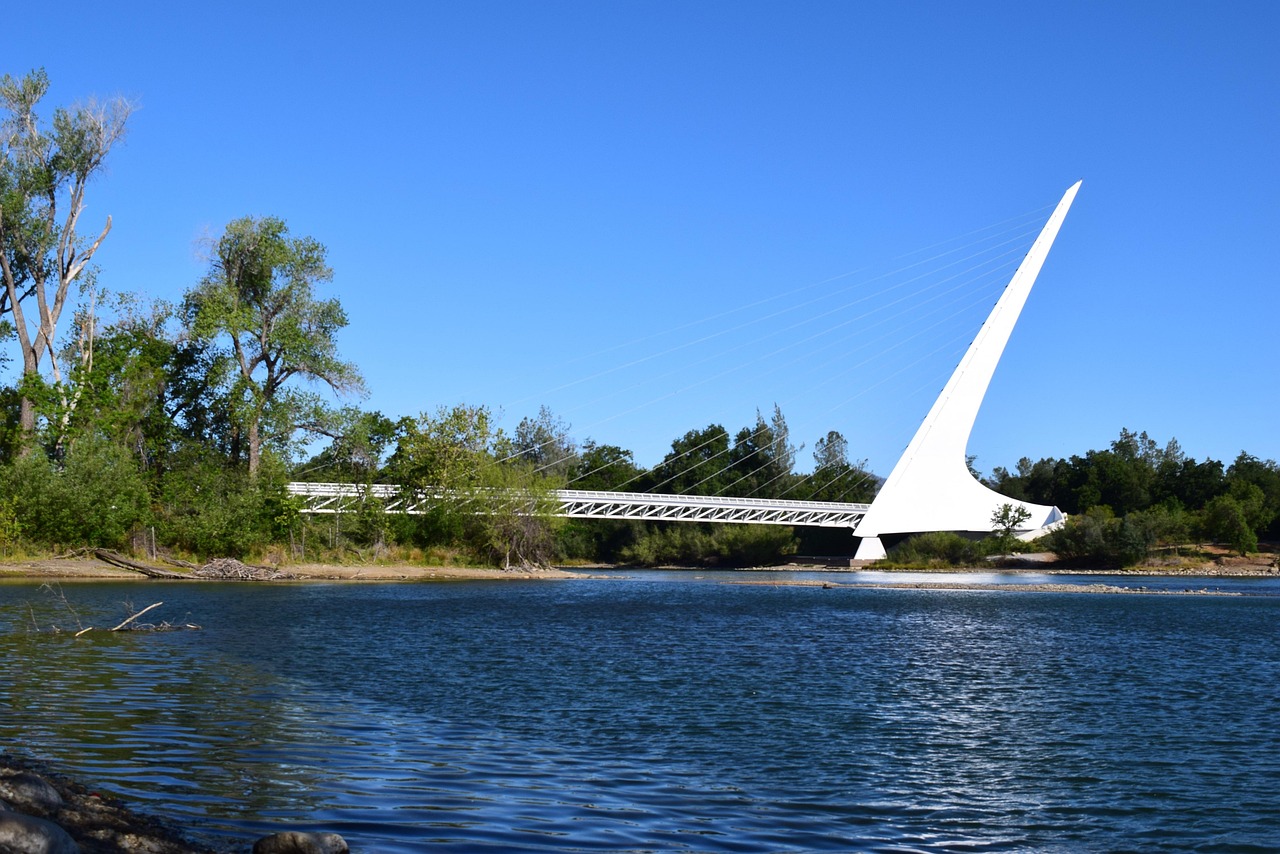
The Sundial Bridge over the Sacramento River in Redding, CA

A Year-Round Calendar for Clearing and Hauling Dry Vegetation Around a Redding Home

2026-10-14

When should dry vegetation come off a Redding property?

Dry vegetation should come off a Redding property in late winter and spring, before the grass cures and while the ground is still soft enough to work. Redding sits at the northern end of the Sacramento Valley, where a wet winter grows a heavy crop of grass and weeds that turns to straw by June. The cleanup that takes one weekend in April takes a crew and a trailer by August, because the piles have grown, the ground has hardened and the heat shortens every working day.

The calendar below follows the way fuel builds up on a lot in Shasta County, and what it takes to haul it away at each stage. It is organized by season because the material, the weight and the risks change with the weather more than with anything else.

What happens on the ground from January through March?

From January through March the work is storm cleanup: fallen limbs, split branches and whole trees that came down in wind or heavy rain. Oaks drop large limbs when the soil is saturated, and pines shed dead branches in every storm. Everything that comes down in winter is heavy, since green wood and wet leaves hold far more water than the same material in July.

That weight matters for the truck. A dump trailer that carries a comfortable load of dry branches in August can reach its limit with a few wet oak rounds. Crews load the heaviest pieces over the axle and keep the lighter brush on top, and wet material gets its own weight ticket at the landfill when it can be separated from the rest.

What should be cut in April and May?

April and May are the months to cut grass and weeds short, limb up the lower branches of trees and clear the ground under them. Grass grows fast after the last rains, and cutting it while it is still green means the clippings are soft, light and easy to move. Cut late in the season, the same grass is dry stalks that scatter in the wind and ignite from a spark.

Limbing up means removing the lower branches of trees so a ground fire cannot climb into the canopy. The common guidance in California is to cut branches up to a height that leaves a clear gap above the shrubs and grass below. Those branches are stacked and hauled rather than left in a pile, since a pile of fresh-cut limbs becomes dry fuel within weeks and sits close to the very trees it came from.

Spring is also the time to deal with the brush that survived the last year. Dead shrubs, old tomato cages, broken lattice and fallen fence rails collect along property lines. Wood that carries paint or stain is separated from clean wood, since it cannot go into the green waste stream.

How does the zone around a house change the work?

The zone around a house changes the work because the closer the vegetation is to the structure, the more completely it has to go. California defensible space rules describe the first few feet next to a building as a space with no flammable material at all, a middle band where plants are thinned and spaced, and an outer band where grass is kept short and dead material is removed. The exact distances and requirements come from the local fire agency, which also inspects, so a homeowner should confirm them there before cutting.

The hauling consequence is simple. Right against the house, everything leaves: mulch, dead plants, stored wood, old cushions and boxes. In the middle band, the crew removes dead branches and the lower limbs of shrubs, and in the outer band it removes dead trees and heavy ground fuel. The amount of debris from the outer band is the largest by volume, and it is the reason a box truck is often the wrong tool for the job.

ZoneTypical workBest vehicle
Against the houseRemove dead plants, stored items, debris in guttersBox truck or pickup
Middle bandThin shrubs, limb up, cut dead branchesDump trailer
Outer bandCut grass, drop dead trees, clear heavy brushDump trailer or roll off dumpster

Why does green waste need to stay separate during a big cleanup?

Green waste needs to stay separate because the landfill and the transfer station treat clean plant material very differently from mixed debris. Clean branches, grass and leaves go to a composting or mulching stream, and a single piece of plastic, a bag of household trash or a chunk of painted lumber can downgrade the whole load. Mixed loads are weighed and charged at the general rate, and the tipping fee follows the scale.

On a big cleanup, the practical answer is to work in two passes. The first pass pulls the green waste and loads it clean. The second pass gathers the junk that turned up along the way, such as an old mattress, a rusted barbecue, a pile of fence wire or a broken appliance. A box spring or a refrigerator with refrigerant still in it cannot ride with the branches, and each goes to a separate drop point.

What do June through September demand?

June through September demand speed, early starts and caution. By June the grass is cured and the heat in Redding regularly climbs above one hundred degrees. A crew that wants to load a trailer with brush starts at first light, because by eleven the metal is hot, the air is thick with dust and every cut with a chainsaw risks a spark on dry ground.

Fire agencies in the region restrict certain equipment during the dry months, and the rules can change from week to week with the fire weather. Power equipment may be limited to morning hours or to cleared ground, and a hand tool is sometimes the better choice in tall dry grass. A homeowner or crew should check current restrictions before using a saw, mower or weed trimmer, and keep a shovel and water within reach.

How do access and slope change the haul?

Access and slope change the haul by deciding whether the truck can reach the pile at all. Many lots in the Redding foothills are reached by a narrow drive with a gate, a steep pitch or a tight turn. If a box truck cannot make the corner, the debris is carried to a staging point by hand, dragged on tarps or moved with a small utility cart.

On a slope, the crew works from the bottom up when it can. Loose limbs tend to roll downhill, and a worker standing below a pile is in the path of everything that shifts. Pieces are cut so they stay where they are placed, and anything heavy is moved with a strap anchored to a tree or the trailer hitch. A dump trailer behind a pickup often handles a lot that a larger truck refuses, and it can be left on level ground at the top while the crew carries material up.

What happens in October and November?

October and November bring leaf fall and the last cleanup before the rain returns. Oaks, maples and ornamental trees drop a thick layer onto roofs, gutters and drives, and the leaves are light when dry and heavy when the first storm soaks them. Gutters and roof valleys get cleared first, since wet leaves rot the roof edge and clog the downspouts.

Which materials never belong in the green waste load?

Treated lumber, painted wood, plastic, rope, wire, rock and soil never belong in the green waste load. Each of those either fails the compost stream or adds weight and contamination. A railroad tie, a section of pressure treated fence post or a bundle of rebar looks like part of the brush pile and is not.

The same goes for household items that tend to collect on large lots. Televisions and other electronics go to e waste or electronics recycling, mattresses go to mattress recycling, and appliances go to appliance recycling. Paint cans, motor oil and propane cylinders are hazardous waste and go to a collection site, never into a dumpster or trailer with branches.

What is the short version of the year?

Cut early, haul in the cool of the morning, keep green waste clean and finish before the rain. A lot cleared in spring costs the least effort in July, when the danger is highest, and a lot cleared in October starts the wet season with nothing waiting to catch fire or rot.
Read more →

Discarded cart and trash in a forest, highlighting environmental pollution

Questions About Hauling Tree Debris, Stumps and Firewood Rounds From a Redding Lot

2026-10-14

What is the heaviest part of a fallen tree to haul?

The heaviest part of a fallen tree is the lower trunk, because that is where the wood is thickest and wettest. A blue oak or valley oak round cut twenty inches across and a foot long can weigh as much as a washing machine, and a pickup bed fills quickly with rounds before the volume looks like much at all. Crews load the rounds first, centered over the axle, then lay branches over them so the load stays low and balanced.

Weight also explains why a trunk is cut in short pieces for hauling even when a longer piece would fit the trailer. A person lifts a round to waist height without help only when it is short enough to handle, and a dropped round breaks a tailgate or a toe.

Does green wood weigh more than dry wood?

Green wood weighs a great deal more than dry wood because the cells are still full of water. A freshly cut oak can carry a large share of its weight in moisture, while seasoned oak that has dried for a year or more is noticeably lighter. That difference shows up at the landfill scale, where a load of fresh oak from a storm weighs far more than the same volume of old limbs that fell in the previous summer.

It also changes the plan. A tree that came down in January is often cut and stacked on site so the wood dries before it is hauled or burned in a stove, while a tree that has to leave right away goes out wet and heavy. The hauler asks about timing before planning the number of trips, since wet loads need smaller loads per trip.

How are stumps removed and hauled?

Stumps are removed by grinding them below grade, by digging them out with a machine, or by cutting them off flush and leaving them to rot. Grinding is common in Redding because the roots stay in the ground and the chips can be spread as mulch. A ground stump leaves a pile of chips and soil that is raked up and hauled if it is not wanted on the lot.

A stump pulled whole is a different haul. The root ball carries soil, rock and sometimes buried wire or old fence post concrete, and it weighs far more than the visible wood suggests. Shaking the dirt loose helps, but a stump with packed clay goes in the heavy debris stream rather than with clean green waste. A dump trailer handles it better than a box truck, and a second person on the ramp makes the load safer.

What can be done with wood chips?

Wood chips can be spread as mulch, used as ground cover on paths and slopes, or hauled off if there is too much. Chips from healthy oak, pine and fruit trees make decent mulch, but chips from diseased wood or poison oak should not go into a garden. Poison oak is common in the foothills around Redding and Palo Cedro, and its oils stay on cut stems and chips for a long time. Anyone handling that material wears long sleeves, gloves and washable clothes, and the load is tarped so the plant does not blow onto neighbors or onto the road.

A large chip pile left in place holds heat in the center and, in the wrong conditions, can smolder. A pile near a structure or a fence is a hazard in the dry season, so a surplus is hauled rather than stacked high next to anything that burns.

Can firewood rounds simply go to the landfill?

Firewood rounds can go to the landfill, but it rarely makes sense because dry oak and pine have real value as fuel. Many Redding homeowners keep a wood stove or a fire pit going, and an oak round split and dried for a season burns well. A neighbor or a local firewood seller often takes rounds off a lot for the splitting labor alone, which saves a haul and a tipping fee.

Some wood does not belong in a stove. Treated lumber, painted boards, pallets with unknown stamps and anything from a burned structure release smoke and residue that should not be breathed or burned. Those go to the landfill as construction or fire debris, weighed separately from the clean rounds.

What changes when the tree was in a burn area?

Trees in a burn area are handled differently because charred wood and fire-weakened trunks carry hazards the clean ones do not. A tree that survived the Carr Fire but has a hollow, burned base can fail without warning, and a trunk that looks sound may crack when a saw loads it. Crews cut from a safe side, drop trees away from structures and wear a respirator, since soot comes off the bark in clouds.

Charred wood and ash are not mixed with clean firewood or chips. They are loaded separately and taken to the landfill, and any soil that is dark with ash is held with the same group. The yard waste stream stays clean, and the weight ticket reflects what was in each load.

Why do steep lots slow down tree removal?

Steep lots slow down tree removal because every piece has to move uphill or downhill by hand or by rope. Crews rig a rope to a trunk, lower rounds slowly and keep everyone out of the line of travel. A round that gets away on a slope picks up speed fast and can end up in a neighbor's yard or on State Route 299.

Drives with soft shoulders and tight bends add to the time. If a truck cannot get close, the crew builds a staging area near the road, carries branches out on tarps and splits heavy rounds in place to shorten the carry. The work takes more labor and less machinery, and the schedule is built around that.

Are there rules about moving firewood and wood debris?

Yes, there are rules about moving firewood, because insects and tree diseases travel in logs. California agencies discourage moving firewood long distances, and certain quarantines apply to specific pests in specific counties. A homeowner who is unsure should ask the county agricultural office before hauling wood out of the area, and should keep the wood local whenever possible.

For ordinary work inside Shasta County, the practical rule is to take wood debris to a permitted green waste or wood drop rather than dumping it along a road or in a creek bed. Illegal dumping near Whiskeytown Lake and the roads toward Shasta Dam is a recurring problem, and it carries fines and cleanup liability for whoever left the pile.

What should be done with leftover sawdust?

Leftover sawdust should be swept up and bagged or added to the chip pile, because a layer of it on the ground is slippery and holds moisture against the soil. Oak and pine sawdust both make usable mulch in small amounts, and a thin layer under shrubs keeps weeds down. Sawdust from treated wood is not used this way and goes out with the construction debris.

Bottom line

Match the tool to the material and keep the clean wood apart from everything else. A lot cleared this way takes fewer trips and leaves less behind.

Read more →